Test the build.
Verify the configuration.
Connect inspection, electrical testing, functional checks, and firmware programming to a clear acceptance plan. Micron EMS helps OEM teams define the coverage, fixtures, and records their build needs in Norwood, Massachusetts.
A clear test result starts with a clear question: what must this assembly do, under which conditions, and what evidence confirms it passed? Define those answers alongside the board design, firmware release, and production plan.
The test plan
Start with what the product needs to prove.
Inspection, electrical test, functional verification, and programming address different requirements. Combine them around the defects, functions, and configuration that matter to your assembly.
Coverage with a purpose
Map each inspection or test to a requirement, an accessible measurement, and an agreed pass/fail limit.
A controlled configuration
Keep the board revision, firmware image, test procedure, and fixture or script revision aligned for each release.
Useful evidence
Define the identifiers, results, measured values, and exception records needed for review and repeat production.
Test coverage
Choose complementary methods. Understand their limits.
The right approach depends on access, board complexity, product risk, quantities, and the information available. Confirm the method, scope, equipment, and responsibilities during the project review.
| Method | Purpose | Coverage consideration |
|---|---|---|
| AOI & X-ray inspection | Visible assembly features, polarity, soldering, and joints that need imaging. | Inspection assesses assembly features; it does not establish that the programmed product performs its intended functions. |
| In-circuit test (ICT) | Electrical connections and component checks using a defined test program and fixture. | Coverage depends on test access, circuit behavior, fixture design, and the checks implemented in the program. |
| Flying-probe test | Electrical checks where probe access and a fixtureless approach suit the board and build stage. | Access, achievable coverage, and cycle time must be evaluated for the design. A fixtureless method still needs test preparation. |
| Functional test | Power-up behavior, interfaces, signals, loads, and product functions under specified conditions. | The procedure must define operating conditions, stimulus, expected results, and pass/fail limits. Only the functions exercised are verified. |
| Programming verification | The approved firmware image and configuration loaded into the intended device. | A successful load or readback check does not replace a functional test of the completed assembly. |
On smaller screens, scroll the comparison sideways to read all columns.
Device programming
Make the approved release repeatable.
Programming requirements should identify the target device, access method, approved image, configuration, and verification steps before production. Review in-system or off-board programming as part of the build scope.
Define the programming package
Give the production team one approved source of configuration.
- Target device and board revision
- Bootloader, application, and configuration files with release identifiers
- Programming interface and accessible connectors or test points
- Verification method, expected version, and release acceptance steps
Plan per-unit configuration
Identify anything that changes from one device to the next.
- Serial numbers, device identifiers, and allocation rules
- Parameter files, calibration values, and option settings where required
- Customer-approved provisioning sequence and responsibilities
- Required programming results and links to unit or lot records
Fixtures, DFT & NPI
Resolve access and setup questions before the build.
Design for test (DFT) considers how an assembly will be accessed, stimulated, measured, and diagnosed. Early review helps identify missing test points, connector access, fixture needs, and unclear acceptance limits.
Review the available access
Share schematics, layout or test-point information, assembly drawings, and the interfaces or signals that need verification.
Define fixture responsibilities
Identify existing fixtures, programmers, scripts, loads, and reference units. Agree who supplies, develops, maintains, and approves each item.
Approve the first setup
Review results on representative units, confirm expected failures and limits, and release the test procedure and configuration before repeating it.
Control production changes
Review the effect of board changes, substituted parts, firmware updates, fixture wear, and script revisions on the approved test coverage.
Results & traceability
Make the record useful after shipment.
Agree on reporting and retention needs during quoting so the test setup can capture the right information from the start.
Evidence tied to the build
Record the result and the configuration behind it.
A report package can be defined around unit or lot identification, pass/fail status, selected measurements, test procedure revisions, programming verification, and agreed inspection images.
Explore Our Quality Approach- Identity & revision
Assembly number, board revision, firmware release, and unit or lot identifiers as required. - Results & acceptance
Tests performed, pass/fail limits, selected values, and the agreed report format. - Failures & retest
Define how failures are reviewed, rework is authorized, and retest results are retained.
FAQ
Questions to settle before the test release.
Does AOI or X-ray replace functional testing?
No. Inspection assesses assembly features and soldering. Functional testing exercises defined product behavior under specified conditions. The test plan should identify which requirements each method covers and any gaps that remain.
How do we choose ICT, flying probe, or functional test?
Start with the product requirements, available test access, board complexity, quantities, and expected life of the build. Review fixture investment, preparation effort, coverage, and cycle time together. Confirm the approach for the actual design rather than selecting from volume alone.
What should we provide for a programming quote?
Identify the target devices, board revision, programming interface, approved firmware releases, configuration rules, verification method, and expected quantities. Call out per-unit identifiers, customer-supplied programmers, and any provisioning requirements.
Can we use an existing fixture or test program?
Share the fixture documentation, software or script requirements, revision history, interfaces, and a description of the current setup. Compatibility, condition, coverage, responsibilities, and any changes needed should be reviewed before production.
What if we do not have a complete test specification?
Describe what the assembly must do and the checks you already use. Share available requirements and known failure risks. The team can review the information and scope the remaining test development, fixture work, and acceptance decisions.
Can testing cover the finished box build?
Identify the complete deliverable and any checks introduced by wiring, enclosure integration, configuration, or accessories. Final-assembly testing should have its own defined conditions, limits, fixtures, and records where the board test does not cover those requirements.
How are specialized tests or certification requirements handled?
Call out calibration, burn-in, continuity, HiPot, environmental tests, or certification needs in the RFQ. Equipment, methods, responsibilities, feasibility, and required records must be confirmed for the project. Production testing is not itself product certification.
Quote
Share the test and programming scope you have.
Start with the product, quantities, schedule, and available documents. Identify the checks you need and the details that are still open.
For a useful review, include:
Need confidentiality arrangements? Ask about a mutual NDA before sharing your package.
Start your testing & programming RFQ
Only name and email are required. Select the technical topics that apply to open relevant questions with examples. Upload available specifications at the end. For larger files, firmware releases, keys, or controlled technical data, contact the team to arrange an appropriate transfer method.
Build planning
Plan the coverage before the first test.
Use these guides to prepare the requirements, access, and evidence your project needs.
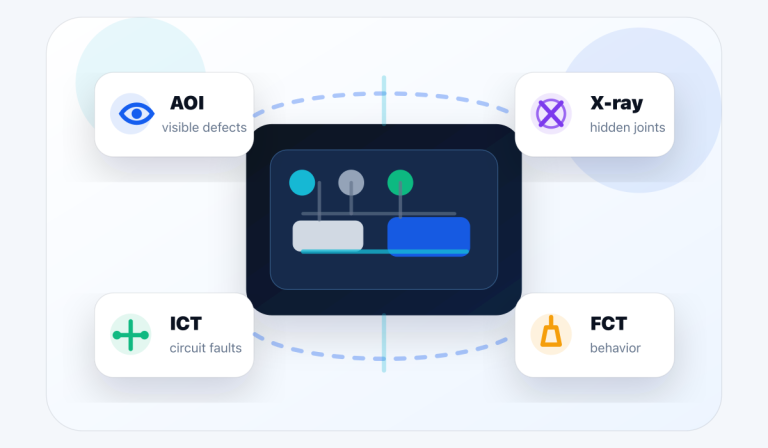
Coverage choices
What does each test method catch?
Compare inspection, electrical test, and functional verification before agreeing on the scope.
Read the guide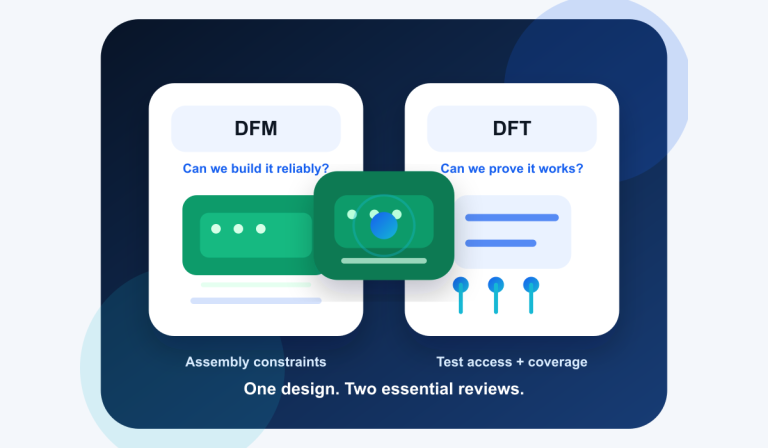
Design readiness
Understand DFM versus DFT.
Separate assembly readiness from the access and requirements needed for testing.
Read the guide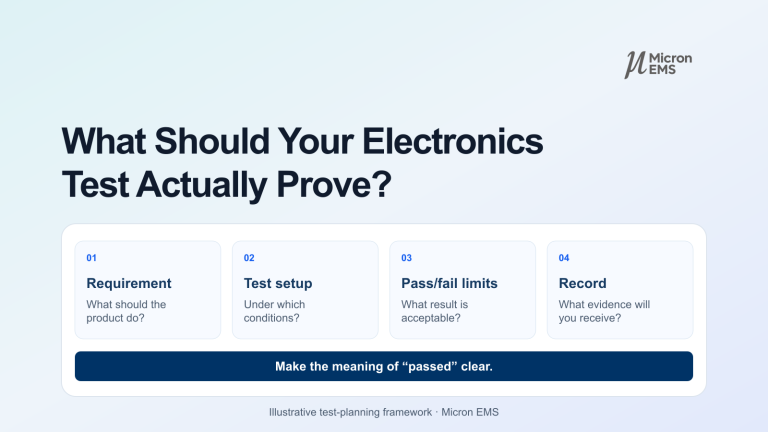
Acceptance planning
Define what the test should prove.
Set acceptance criteria, required evidence, and the response to a failure before production.
Read the guideReady to define the next test?
Share the assembly, release requirements, and test package you have. Micron EMS can help clarify the scope, preparation, and evidence needed for your build.