


 IONIZER AIR PURIFIER
How EnergAire works
Cleaner-feeling air, powered by ions.
EnergAire uses negative ion technology to charge airborne particles so they can cluster, settle, and leave the breathing zone more readily. Because ionization works in the room itself, it can help address particles that never reach a conventional filter.
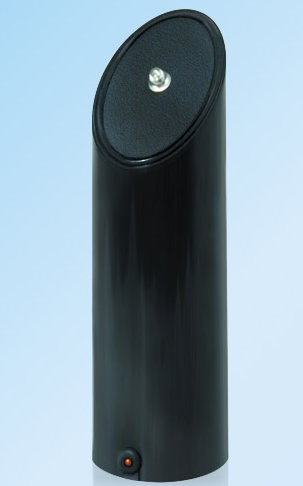
The process
Three simple steps. No filter cartridge in the middle.
EnergAire changes the behavior of particles already in the room. Once particles settle, normal dusting and vacuuming can remove them from surrounding surfaces.
Generate
EnergAire creates negatively charged ions and releases them into the surrounding air without a fan or filter.
Attach
Negative ions can attach to airborne smoke, dust, pollen, dander, and other fine particles suspended in the room.
Settle
Charged particles can cluster, become heavier, and settle from the breathing zone more readily than they would alone.
Particle size range
Ionization works on particles wherever they are suspended.
Particle size matters, but particle location matters too. A filter-based purifier can only collect particles that its airflow carries into the filter. Ionization works in the room itself.
micron. EnergAire can help address fine particles that remain suspended or never pass through another purifier’s collection media.
Simplified orientation based on product material. Actual performance depends on particle concentration, airflow, room layout, and operating conditions.
Why ionization works
Charge changes how tiny particles behave.
Airborne particles are easy to overlook because many of them are too small to see. When negative ions attach to those particles, the particles become electrically charged and are more likely to interact with one another and nearby surfaces.
That is the useful distinction: EnergAire does not need to pull room air through a disposable filter. It works in the room itself, helping fine airborne material move out of suspension so ordinary cleaning can take it away. This can help address particles that other air-purification systems may leave suspended when those particles do not reach their collection media.
- More contact Charged particles are more likely to attract or cluster with other particles.
- Less time suspended Clusters and charged particles can settle more readily than isolated fine particles.
- Simple follow-through Once particles settle, dusting and vacuuming remove them from the room’s surfaces.
across the room Cross-room flow EnergAire
Pair with a fan
Better circulation can help EnergAire reach more of the room.
A small fan does not create more negative ions. It helps distribute the ions EnergAire already produces, carrying them away from the immediate area around the unit and into the broader room.
Yes, placing a fan behind or slightly to the side of EnergAire can make sense when the fan has open clearance and pushes air into the room. The preferred arrangement is a low-speed cross-room flow that carries ionized air past the unit and through the space.
The wellness connection
A fresher atmosphere can change how a room feels.
People often describe the air after a storm, near moving water, or outdoors as fresh and invigorating. Negative ions are naturally present in those environments. EnergAire brings that familiar ionization idea indoors, with sensible expectations.
A cleaner-feeling space
When smoke, dust, and other fine airborne material are reduced from suspension, a room may feel less stale, heavy, or dusty.
A calmer daily rhythm
Quiet, low-power operation lets EnergAire support the atmosphere of a room without adding fan noise or a maintenance routine.
No medical promises
Research on wellness effects from air ions is mixed. EnergAire is an air-cleaning product, not a treatment for illness or a guarantee of health outcomes.
Read more from reliable sources: PubMed review of air ions and mood outcomes and the U.S. EPA overview of ionizers and indoor-air considerations.
Negative ion technology should be understood alongside ordinary cleaning, source control, ventilation, and the specific safety information for the device being used.
Clear expectations
What ionization does, and what it does not do.
It can help airborne particles settle
Negative ions charge airborne material and can help particles cluster or move onto surrounding surfaces where normal cleaning can remove them.
It does not make particles disappear
Particle buildup still needs to be wiped, dusted, or vacuumed. A fan can help spread the ionized air and reduce concentrated buildup near the unit.
It is not a substitute for ventilation
Ventilation, moisture control, source control, and appropriate filtration still matter when a room has smoke, odors, gases, or other indoor-air concerns.
It is designed for everyday air support
EnergAire provides a simple, filter-free layer of support for homes, offices, workshops, basements, garages, and similar indoor spaces.
Questions before ordering
How to get the most from EnergAire.
Use open room placement, give the ions room to circulate, and keep expectations practical. EnergAire works best as part of a clean-air routine.
Should I put a fan behind EnergAire?
You can, provided the fan has clearance and helps create a gentle cross-room flow. A low-speed fan behind or slightly offset from EnergAire can carry ions away from the unit, but the airflow should continue across the room. Do not press either device against a wall or aim a high-speed stream directly into EnergAire.
Does EnergAire use a filter?
No. EnergAire releases negative ions into the surrounding air instead of pulling air through a filter cartridge. There are no filters, bags, cartridges, or replacement media to buy.
Why do negative ions affect particles?
Negative ions attach to airborne particles and give them an electrical charge. Charged particles can attract or cluster with other particles and settle more readily from the air.
Will EnergAire replace cleaning or ventilation?
No. EnergAire is intended to support cleaner-feeling room air. Continue normal cleaning and use appropriate ventilation, moisture control, source control, or filtration for the conditions in the space.
Is EnergAire a medical device?
No. EnergAire is not presented as a treatment for disease or a substitute for medical care. The wellness language on this page describes atmosphere and comfort, not guaranteed health outcomes.
Ready to try filter-free ionization?
See what EnergAire can do in your space.
Negative ion technology, quiet operation, and no filters to replace.