


Precision SMT assembly for high-reliability electronics.
Micron builds prototypes, NPI, and high-mix low-volume SMT assemblies in Norwood, Massachusetts with fine-pitch placement, profile-tuned reflow, 3D AOI, X-ray support, and disciplined documentation.
SMT assembly quality is won through small details: the right solder paste strategy, controlled placement, stable thermal profiles, inspection discipline, and clear communication before the build reaches the floor. Micron is built for customers who need that control without the distance and delay of a larger offshore supply chain.
Overview
SMT manufacturing built around controlled paste, placement, heat, and inspection.
Micron supports SMT programs from early prototypes through pilot builds and recurring production. The focus is high-mix, low-volume work where details such as BOM alternates, stencil design, component availability, inspection coverage, and test assumptions can affect schedule and reliability.
BOM, Gerbers or ODB++, centroid data, assembly drawings, quantities, and schedule targets.
Stencil strategy, panelization, feeder setup, material readiness, and route planning.
Paste printing, placement, reflow profiling, first article, and controlled production.
3D AOI, X-ray as required, records, rework disposition, test, and shipment documentation.
Prototype-to-production thinking
Early builds can be used to surface DFM, sourcing, stencil, placement, and test concerns before repeat production.
New England responsiveness
Engineering, purchasing, quality, and production details can be discussed with the team handling the assembly.
Documentation discipline
Traveler requirements, inspection records, labeling, traceability, and customer acceptance criteria can be aligned before build release.
Capabilities
What Micron supports on SMT programs.
From fine-pitch placement to mixed-technology handoff, Micron’s SMT line is structured for customers that need clean launches, reliable builds, and practical engineering feedback.
Fine-pitch placement
Support for QFN, BGA, micro-BGA, fine-pitch ICs, and dense component layouts where placement accuracy matters.
Small passive capability
Machine vision and controlled setup support assemblies with 01005 components and other compact packages.
DFM and stencil strategy
BOM review, footprint concerns, aperture recommendations, panelization, fiducials, rails, tooling holes, and paste volume planning.
Prototypes and NPI
Quick-turn and risk-reduction builds for EVT, DVT, pilot runs, and design changes that need practical shop-floor feedback.
Turnkey, consigned, or hybrid kits
Material models can be aligned to the program, including BOM scrubs, AVL checks, shortages, alternates, and lifecycle risk.
Inspection, test, and programming handoff
AOI, X-ray where needed, functional test coordination, firmware loading, serialization, and production recordkeeping.
Equipment
The SMT line from print through inspection.
Micron’s current SMT equipment path supports the connected process that matters most: accurate paste printing, precise placement, stable reflow, and inspection feedback.
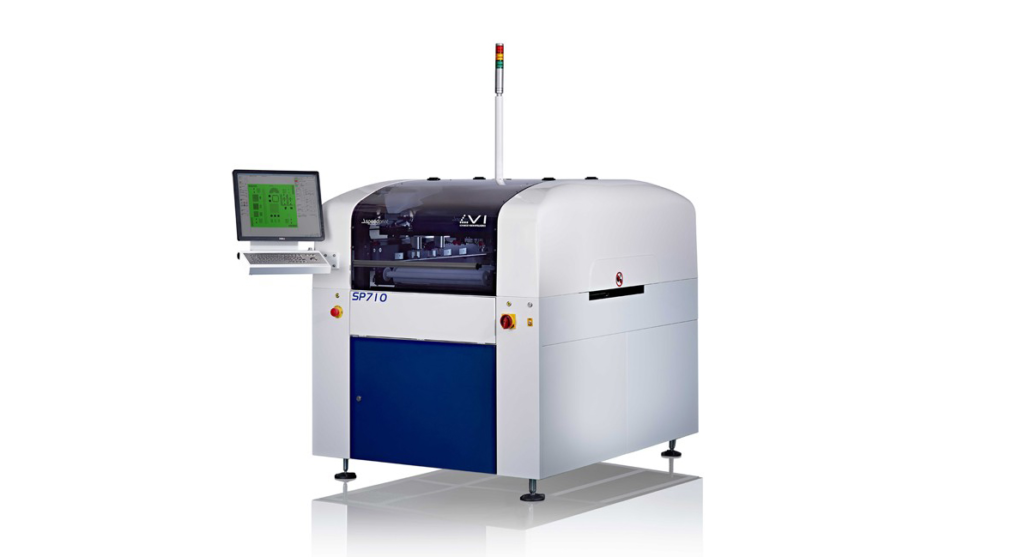
SpeedPrint SP710 — Stencil Printer
Twin roving cameras support PCB-to-stencil alignment for repeatable paste deposition on fine-pitch pads and compact components.
Read equipment detail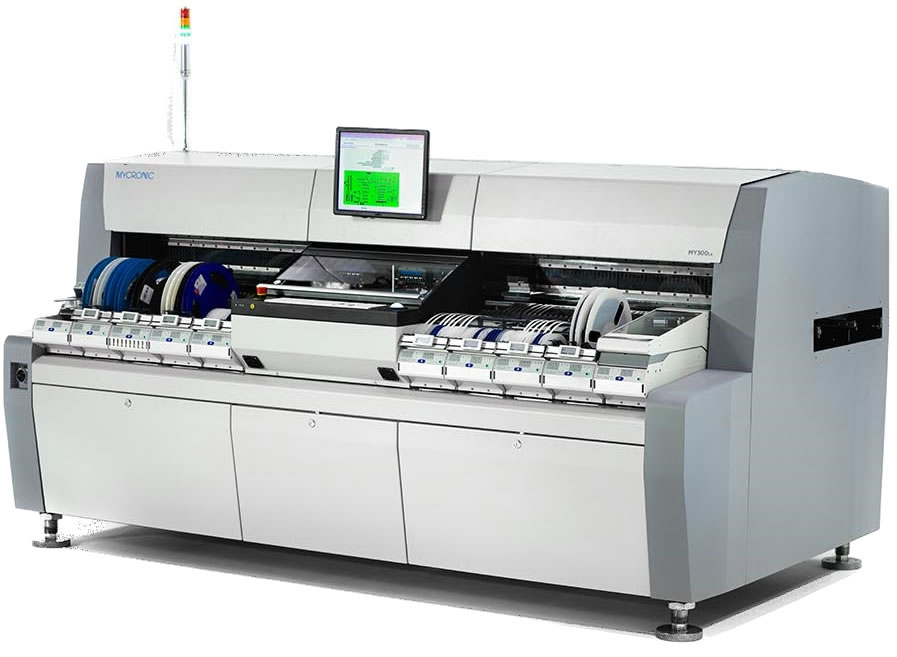
Mycronic MY300 & MY200 — Placement
High-resolution vision and smart feeders support QFN, BGA, fine-pitch, and 01005 placement with repeatable setup control.
Read equipment detail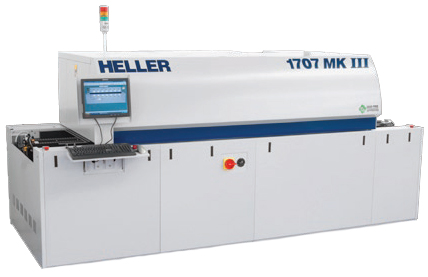
Heller 1707 MKIII — Reflow Oven
Multi-zone convection reflow and process control support stable thermal profiles, consistent solder joints, and low-voiding goals.
Read equipment detail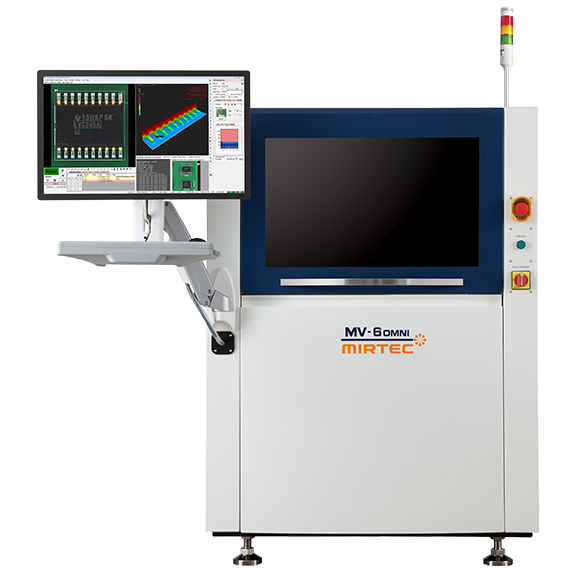
Mirtec MV-6 Omni — 3D AOI
3D Moire inspection, telecentric optics, and multi-angle lighting help verify solder joints, polarity, markings, and small components.
Read equipment detailIndustries
SMT support for products where reliability is part of the spec.
Micron is a strong fit for programs where inspection evidence, revision control, responsive communication, and controlled production records matter as much as component placement.
Aerospace / defense
Ruggedized electronics, controlled documentation, lot visibility, and build discipline for high-reliability applications.
Medical and diagnostic
Traceability, cleanliness expectations, repeatability, and customer-specific inspection or record retention needs.
Industrial controls
Low-volume production for controls, instrumentation, power, sensing, and equipment used in demanding environments.
Labs and product teams
Quick-turn SMT prototypes, EVT/DVT builds, bring-up support, and rapid feedback when designs are still changing.
Sensors and instrumentation
Dense boards, calibration-sensitive products, fine-pitch devices, and assemblies that benefit from stable processes.
OEM production support
Recurring builds with revision control, sourcing visibility, inspection requirements, and practical schedule communication.
Quality
Quality is designed into the launch, not inspected in at the end.
SMT quality begins before paste is printed. The quote package, BOM, component packaging, PCB finish, panel design, process route, inspection plan, and test notes all affect how confidently a build can move through production.
Documentation and controls
From incoming data to shipment records.
Micron supports SMT requirements such as IPC-A-610 and J-STD-001 Class 2 or Class 3 as specified, ESD controls, lot traceability on request, first article inspection, AOI/X-ray records, archived reflow profiles, labeling, serialization, and customer acceptance criteria.
- ✓Requirement review
Class, revision, solder type, reporting needs, labeling, and special process requirements. - ✓Controlled handling
ESD-safe handling, kit verification, MSL awareness, and clear disposition of material issues. - ✓Inspection evidence
AOI, X-ray as required, first article, reflow profiles, and build records aligned to the program. - ✓Repeat-build readiness
Revision control, notes from the first build, and production feedback that improves future lots.
Process
A clearer path from SMT quote to documented shipment.
The best SMT outcomes come from eliminating guesswork before the build starts. Micron’s process turns RFQ data into a controlled production plan, then carries that plan through setup, inspection, rework disposition, test, and shipment.
RFQ and data review
Review BOM, Gerbers or ODB++, centroid data, drawings, quantities, schedule, turnkey or consigned material model, and quality requirements.
DFM and sourcing flags
Identify package, footprint, MSL, alternates, obsolete parts, stencil, panelization, fiducial, and test assumptions that can affect launch.
Launch and setup
Prepare route, traveler notes, stencil, paste, feeders, inspection program, reflow expectations, and first article criteria.
Print, place, and reflow
Control paste deposition, placement setup, reflow profile, handling, and production feedback as boards move through the line.
Inspect and disposition
Use AOI, X-ray where needed, first article checks, photos or reports, and controlled disposition for defects or engineering questions.
Test, records, and shipment
Coordinate ICT or functional test, programming, serialization, labeling, packaging, documentation, and repeat-build notes.
FAQ
SMT questions customers ask before sending an RFQ.
These answers help engineers, buyers, and product teams package the right information for a faster, cleaner SMT quote.
What files do you need for SMT quoting?
Send a BOM with approved alternates, Gerbers or ODB++, pick-and-place or centroid data, assembly drawings, test or ICT notes, target quantities, target dates, and any special processes such as underfill, coating, cleaning, or no-clean requirements.
Which centroid or pick-and-place file formats are preferred?
CSV or TXT is usually easiest. Include reference designator, X position, Y position, rotation, side, package, units, and the coordinate datum. Matching the centroid data to the assembly drawing helps reduce setup questions.
What stencil guidance do you recommend?
Stencil decisions depend on the board, part mix, paste, finishes, and component density. Fine-pitch parts, QFNs, and BGAs may need aperture reductions, windowpane apertures, or step-down strategies to control paste volume and reduce voiding.
Can Micron place 01005 components and micro-BGAs?
Yes. Micron’s placement line supports 01005 capability and fine-pitch devices. High-resolution vision, controlled setup, tuned profiles, AOI, and X-ray where needed help manage risk on small and hidden-joint components.
How do you control reflow quality and voiding on QFNs or BGAs?
Reflow quality is managed through paste selection, stencil strategy, thermal profiling, soak and peak control, and inspection feedback. X-ray can be used for hidden joints and voiding review when the program requires it.
What PCB finishes work best for fine-pitch SMT?
ENIG and ENEPIG are common choices for fine-pitch and BGA work because they are stable and solderable when handled correctly. OSP and immersion silver can also work, but shelf life, storage, and oxidation risk should be considered early.
Do you build lead-free and leaded assemblies?
Yes. Micron can build lead-free or leaded assemblies according to customer requirements. Call out solder type, RoHS requirements, mixed-technology concerns, and any segregation requirements in the BOM and build notes.
Do you support cleaning or no-clean processes?
Many SMT assemblies use no-clean flux or paste. When a program requires cleaning, ionic cleanliness, or customer-specific residue limits, include that requirement with the RFQ so the process can be quoted and planned correctly.
What panelization and fiducial information should be included?
Include panel drawings when available. Rails, tooling holes, global fiducials, local fiducials for fine-pitch parts, breakout tabs, and component keep-out areas all help avoid setup and handling issues.
How do you handle moisture-sensitive components?
MSL handling should be identified in the BOM or part notes when possible. Parts with expired floor life, damaged packaging, or questionable humidity indicators may require baking or additional review before placement.
Can you provide first article inspection and inspection reports?
Yes. First article inspection, AOI results, X-ray captures for BGAs or QFNs, and reflow profiles can be provided when specified. Add reporting requirements to the quote request or purchase order.
Can you work from customer-supplied kits?
Yes. Consigned, turnkey, partial-turnkey, and hybrid material models can be supported. For consigned kits, include a packing list, label reels and trays clearly, protect components in ESD-safe packaging, and identify shortages or substitutions.
Do you provide test and programming after SMT assembly?
Micron can support ICT, functional test, fixture coordination, firmware loading, serialization, and basic bring-up when requirements, procedures, fixtures, keys, and acceptance criteria are provided.
What happens if a build issue is found?
The build should pause for documentation and disposition. Micron can share photos, notes, suspected cause, and recommended next steps such as rework, use-as-is with customer approval, ECO clarification, or material replacement.
Quote
Send the SMT build package you have.
Attach the core files and explain what is known, what is still changing, and what the assembly needs to do after it is built. A strong RFQ helps Micron evaluate material risk, assembly scope, inspection coverage, test requirements, and schedule earlier.
For a faster SMT review, include:
Start the SMT RFQ
Use the quote form to share project details and upload the files available today. If the package is incomplete, note what is still open so the review can separate known scope from assumptions.
Ready to start your build?
Send your BOM, Gerbers, centroid data, assembly drawings, quantities, test notes, programming requirements, and schedule goals. Micron can review the package and help identify the clearest path from SMT data to reliable assembly.