
Wisdom Wednesday · October 28, 2026
Devices and Dialogues
Welcome back to WISDOM WEDNESDAY! Where intelligence is not artificial. Much of what is being considered with regards to modern electronics focuses on the products of companies that currently are Wall Street darlings. Today we’re going to turn our gathered attention to the products of an American multinational semiconductor company that was founded and is still headquartered in Massachusetts. Wisdom Wednesday is brought to you by µEMS, a division of Micron Corporation.
Analog Devices
Analog Devices, Inc. (ADI) was founded in 1965 by Ray Stata and Matthew Lorber. Lorber was raised in Brooklyn, New York. Ray spent his youth in Oxford, Pennsylvania. They were classmates at MIT in the 1950s. Their first product was an operational amplifier or op-amp. So what is an op-amp? An op-amp is a DC-coupled, high-gain device that amplifies the voltage difference between inputs that are non-inverting (V+) and inverting (V-) to produce a single ended voltage output. That’s a mouthful, even for an engineer. A simpler way to understand its function is to consider the name of the company. Op-amps are at the heart of amplifying analog signals. They can do much more than that. But the heart of the matter lies in interpreting analog signals.
Analog devices are designed to directly represent and process physical quantities in a continuous form. Physical quantities such as temperature, light, and sound pressure are mapped onto our physical understanding of the world around us. Think microphones and speakers. This differs from digital systems that involve discrete steps which are discontinuous. Think music CDs.
Fast forward into this century and Analog Devices’ website states that in 2015 it had 100,000 customers, 2,200 patents, and 9,700 employees. Those numbers represent a significant amount of product development. And there is one current product in particular that we are going to focus on: the AD587KRZ. It is an integrated circuit that generates a highly stable and precise reference voltage and is known as a monolithic voltage reference. Just as with the op-amp it is used in analog circuits and is an analog device.
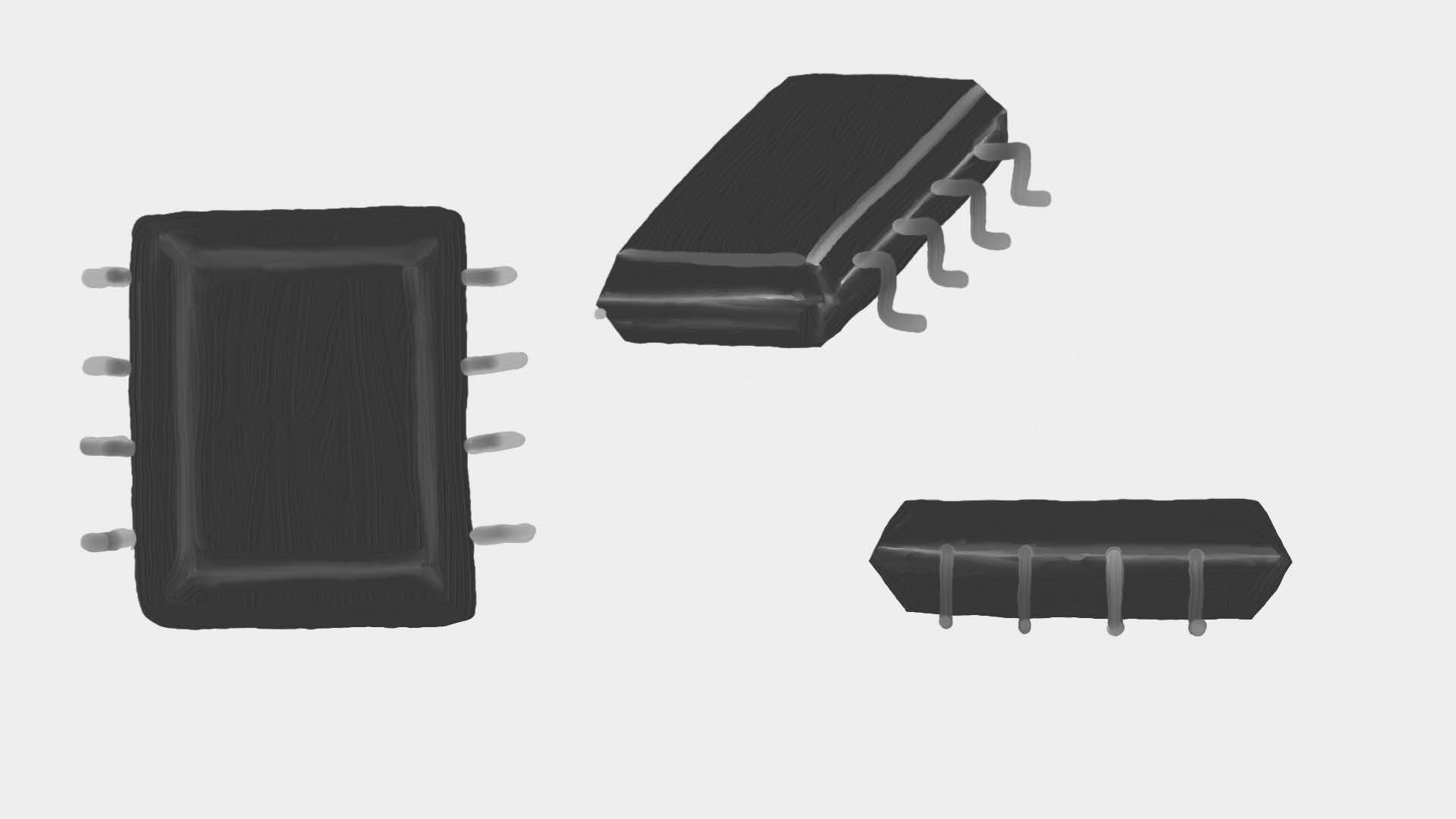
Figure 1. Representational Views of the AD587KRZ
Micron Corporation has built PCB assemblies utilizing this component for the semiconductor industry (as well as for other industries) for many years. In that time prices for the AD587KRZ had spiked to as high as $64.17 during the supply chain restrictions of 2022. It has been available for less than a dollar according to some sources of spot prices, though the quantity purchase requirements and the reliability of those components are questionable. Pricing from authorized distributors such as DigiKey varies with purchase quantity and availability; check the distributor’s listing for current pricing. Bottom line is that the prices of the AD587KRZ can vary significantly based on market conditions.
Price fluctuations such as those for the AD587KRZ are often true for other active electronic components. This is one of the reasons that the stock prices of semiconductor manufacturing companies can also change quickly. Micron Technology, Inc. (MU) stock for instance has gone from just under $100 to over $1,000 over the last three years.
Analog Dialogue
There is another aspect of Analog Devices that is more than worthy of note in the context of Wisdom Wednesday. In 1967 they published the first issue of Analog Dialogue. It is a long-running electronics publication. It is a free technical magazine published monthly. It is a platform written by engineers for engineers that “offers answers and insights related to circuits, as well as systems and software for real-world signal processing system design.” In other words, it’s a place where people in the industry share accumulated knowledge in a way that helps to build more industry knowledge. Sound familiar?

Figure 2. Ray Stata Poses with Analog Dialogue
The current website for ADI Analog Dialogue contains all the past magazines and much more. There is also a “StudentZone” that contains copious material for teaching new entrants into the field about relevant topics in the field of circuits. Perhaps the most interesting tab at the site is “RAQs” – Rarely Asked Questions. One RAQ entry is Issue 243 from February 2026. It is titled “Don’t Let Your Feedback Loop Fall Flat—Part 1: Bias Your Optocoupler Right!” Hopefully, that gives you a gist of the extent of knowledge sharing going on at the website.
Micron Corporation continues this dedication to bringing you a similar type of information sharing by posting Wisdom Wednesday. So let’s keep the messages moving back and forth between all of us. One good way is to visit the website at microncorp.com. Another way is to get in touch with MICRON CORPORATION to discuss any topics you find noteworthy at info@microncorp.com.