
Wisdom Wednesday · By Chuck Theos
Coded Rotary Switches
Welcome back to WISDOM WEDNESDAY! Coded rotary switches provide a simple, manually selected setting for electronic equipment. This week, we look at a 16-position switch, its regular and complement contact patterns, and the details that matter when purchasing and assembling it. Wisdom Wednesday is brought to you by µEMS, a division of Micron Corporation.
How coded rotary switches work
Most of us are familiar with switches. We use them to turn the lights off and on, start or stop our vehicles from running, or control the dishwasher, washing machine, and dryer. Switches are somewhat ubiquitous in our daily lives. But not all switches are manufactured for the same complexity of tasks. Some switches are far more sophisticated than others. Their cost also reflects their construction and function, not simply their size.
The CRD16CM0CB is such a switch built by the C&K Switches division of Littelfuse, Inc. It is a 16-position hexadecimal complement coded rotary DIP switch. Let’s break that down. Where are the 16 positions? On the top face of the beveled rectangular through-hole component there is an arrowed slot surrounded by a series of alphanumeric characters. These characters read “ABCDEF0123456789.” Notice there are 16 of them. These positions can be set by inserting a #0 Phillips screwdriver into the slot and turning. Yes, by hand. That’s part of the beauty of the switch. It can be set manually to accommodate changing situations, especially unforeseen operational boundaries. The image below is one version of the CRD16 series of 10 mm coded rotary DIP switches.
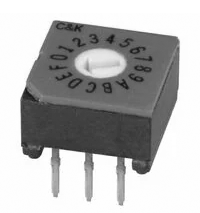
Figure 1. Top view of a CRD16 coded rotary switch
What does hexadecimal mean?
Let’s continue the breakdown. Why hexadecimal? Hexadecimal uses sixteen symbols: 0–9 and A–F, representing values 0–15. Four binary bits provide sixteen possible combinations. The six leads are a separate matter. Those six leads correspond to four terminal bits and two common terminals. The bits are 1, 2, 4, and 8 and the commons are labelled “c.” This provides for output values in a 4-bit binary format by connecting the bits to the common in various formations based on the 16 position settings. The following diagram appears in the C&K CRD series datasheet (PDF). The top row of alphanumeric characters represents the positions of the switch shown explicitly on the right. The left column from C down to 8 are the common and the bits.
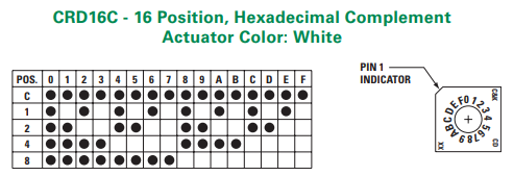
Figure 2. CRD16C contact pattern by dial position
Now, let’s finish the breakdown of “16-position hexadecimal complement.” The CRD16R uses regular hexadecimal contact coding; the CRD16C uses the complementary contact pattern. At a given dial position, a contact connected to common in the regular version is open in the complement version, and vice versa. These are electrically complementary patterns, rather than physically mirrored switches. The datasheet specifies solder processing at “0” for the R version and “F” for the C version, where all four coded contacts are open. Verify the exact variant before assembly or substitution; the circuit’s pull-up or pull-down arrangement determines how those contact states are read as logic levels.
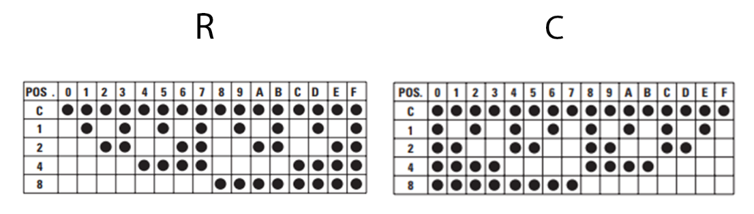
Figure 3. Regular and complement contact patterns
Component prices and materials
For a purchasing example, the table below records DigiKey’s listed CRD16CM0CB prices on November 3, 2026, in U.S. dollars. This is a dated snapshot, not a current quotation; pricing and stock can change. See the DigiKey product listing for current terms.
| Quantity | Unit Price (USD) | Extended Price (USD) |
|---|---|---|
| 1 | $11.37000 | $11.37 |
| 10 | $9.42300 | $94.23 |
| 45 | $8.31978 | $374.39 |
| 135 | $7.63133 | $1,030.23 |
| 270 | $7.25107 | $1,957.79 |
| 540 | $6.91206 | $3,732.51 |
| 1,035 | $6.62973 | $6,861.77 |
The unit price drops from $11.37 for one switch to $6.62973 at the 1,035-piece price break, approximately 42% lower. That illustrates quantity pricing. The highest quantity shown is a listed price break, not necessarily the largest order allowed. Quantity discounts help with budgeting, but a build still needs current quotes and approved sourcing.
The materials provide useful supply-chain context. The datasheet lists plastic cover, housing, and actuator materials, beryllium-copper contacts plated with gold over nickel, and brass terminals with gold/nickel plating. Beryllium copper is an alloy, not a chemical compound. These specifications explain what is inside the switch, but they do not establish how much each material contributes to its selling price.
The 2026 annual summary linked from the USGS beryllium resource page describes U.S. bertrandite mining in Utah and subsequent processing into beryllium products, including beryllium-copper master alloy. Domestic ore production is only one stage of that supply chain. Those reports describe mineral supply; they do not provide a cost breakdown for CRD16 switches.
What to check before an electronics build
- Confirm the complete part number and whether the design requires regular or complement coding.
- Record the datasheet’s solder-processing position separately from the product’s final operating setting.
- Verify the assembled switch setting and circuit response against the approved test procedure.
Related Wisdom Wednesday reading: Devices and Dialogues and Critical Minerals and Rare-Earth Elements.
That brings us to the end of another post of Wisdom Wednesday. Our shared communication continues to be one of the greatest assets of the electronics manufacturing industry. Take a closer look at the industry for yourself at MICRONCORP.COM, or share your thoughts with us at info@microncorp.com.