What It Takes to Build Electronics You Can Rely On
After the launch of Micron EMS and this week’s Design-2-Part Show, a practical look at the decisions that connect a working circuit board with a dependable product.
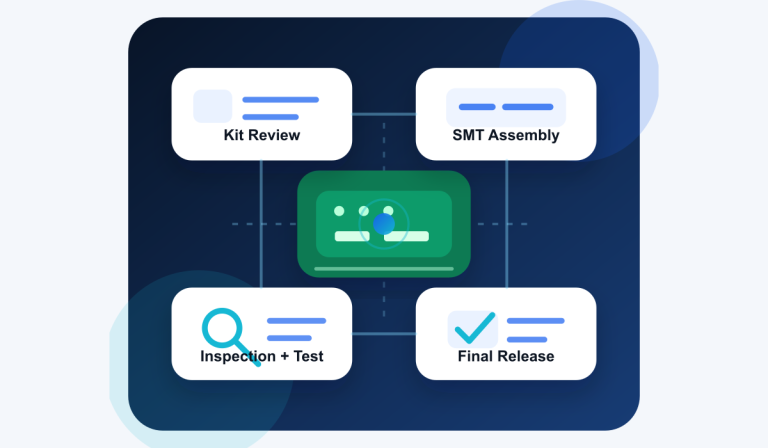
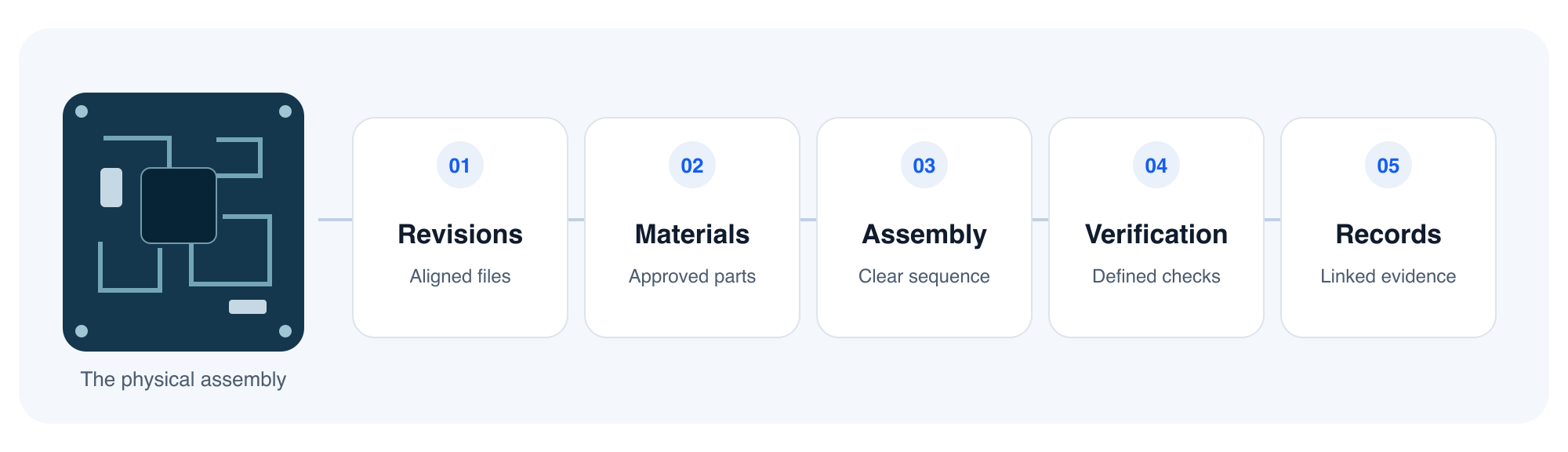
- 01RevisionsAligned files
- 02MaterialsApproved parts
- 03AssemblyClear sequence
- 04VerificationDefined checks
- 05RecordsLinked evidence
Reliable electronics begin with decisions you can repeat.
When an electronic product works well, most of its manufacturing story stays invisible. You see an instrument display a reading, a controller respond to a command, or a piece of equipment start when it should. You rarely see the decisions about components, solder joints, software versions, test procedures, and build records that helped make that behavior repeatable.
This week, Micron introduced Micron EMS, the identity for our electronics manufacturing division, and brought it to the New England Design-2-Part Show in Marlborough on September 30 and October 1. Thank you to everyone who visited Booth 454, and to the Design-2-Part team for bringing manufacturers, engineers, and buyers together.
A manufacturing show makes it easy to see the range of parts and processes behind a finished product. For electronics, the important question continues after the show: what needs to be understood before a design can become a build you can depend on?
Align the approved files, component choices, and assembly instructions.
Agree on what inspection and testing must verify before release.
Link the records and carry useful findings into the next run.
What the Micron EMS name means
EMS stands for electronics manufacturing services. That work can include assembling printed circuit boards, integrating wiring and enclosures, loading software, and checking the finished assembly against agreed requirements.
Micron EMS gives that work a clearer identity within Micron Corporation. Our Norwood operation and the experience developed since 1982 stand behind the name. The new gray logo includes the Greek letter μ, the symbol for “micro.” A micron is one millionth of a meter—a fitting connection to work where small details matter.
Those details are also where an experienced manufacturing partner should be useful. Here are five questions that help make the work more concrete, whether you are developing your first product or planning another production run.
Are we building the same version?
A board design is only part of the instruction set. The component list, assembly drawing, software, and test procedure all need to agree on what is being built.
Revision control is the practical answer: identify the approved versions, record changes, and make sure those decisions reach everyone who needs them. For a reader evaluating a supplier, a useful question is: “How will you confirm that the parts, drawings, and software all belong to this build?”
Will the parts plan survive the next order?
A part that is available for ten prototypes may be harder to obtain for the next production lot. That is why the bill of materials—the list of components needed to build the product—deserves attention before the schedule becomes urgent.
The useful discussion covers which alternatives are approved, who buys the parts, and who authorizes a substitution. Our article on building a more resilient BOM explores that planning in more detail.
Can the product be assembled and serviced sensibly?
A circuit board eventually has to live somewhere. It may sit inside an enclosure, connect to a cable harness, or be mounted in equipment that vibrates. The physical arrangement affects how people assemble, inspect, test, and service it.
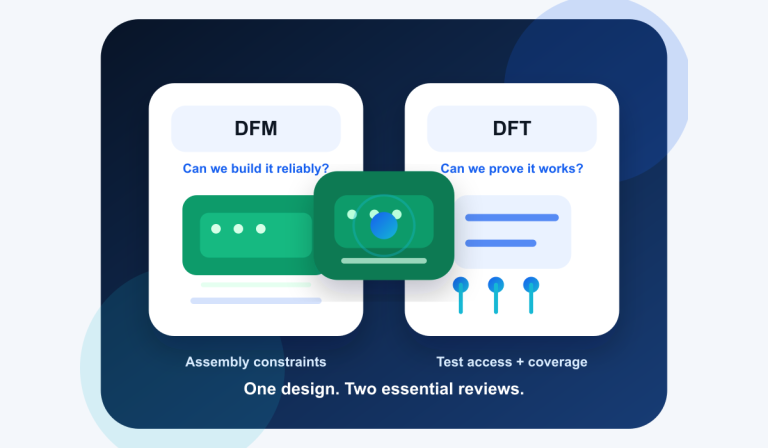
This is part of design for manufacturing: reviewing how the design will become a physical assembly. Sometimes the most useful next step is to put the board, cable, and enclosure on the same table and walk through the sequence.
What does “tested” actually mean?
Testing is most useful when everyone understands what it verifies. Inspection may check assembly workmanship. A power-up check may confirm that a board starts. A functional test may exercise specific inputs, outputs, or operating modes. Those activities answer different questions.
Ask what will be checked, which software version will be loaded, how failures will be handled, and what results will be retained. A clear test plan makes the word “tested” meaningful.
Could we explain this build a year from now?
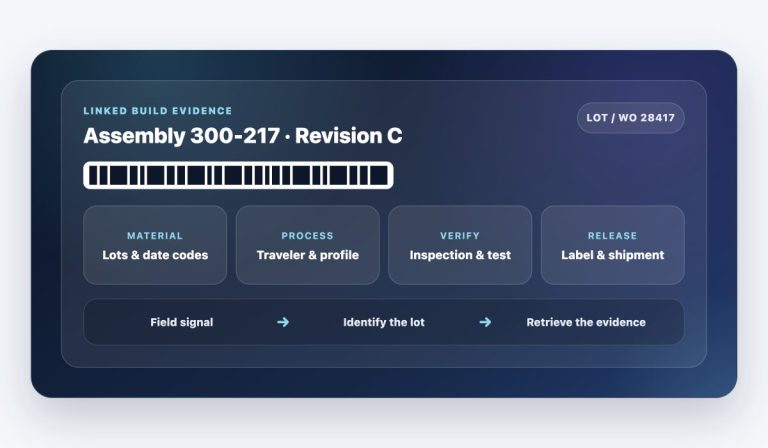
Once a product ships, the build records become part of its support. If a unit returns or a supplier flags a suspect component lot, the team needs a way to connect the affected assembly with its materials, revision, and relevant inspection or test results.
Our article on traceability after shipment explains how those connections can support a more focused response.
Turn the first conversation into a useful next step.
Themes from our recent articles—component availability, prototype learning, physical assembly, testing, and traceability—meet in the same place: the handoff between the people designing a product and the people building it.
A nearby partner can make a hands-on review easier. Its value grows when the answers from that review become approved instructions and clear responsibilities. Bring these four things to start a productive conversation.
Explain the product’s job.
Where will it operate? How will it be handled? What matters most to the person using it?
Bring the current files.
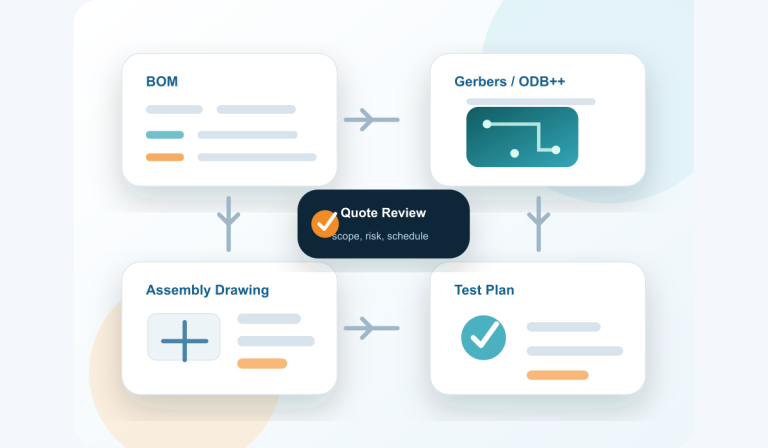
Share the parts list, board files, drawings, software version, and known open questions.
Describe what comes next.
Prototype, pilot, supplier transfer, or repeat production—with realistic quantities and timing.
Agree on what to verify.
Discuss the required inspection and testing, and which records should accompany the shipment.
You can begin before every detail is settled. Identifying what is still unknown is useful work. The next step is to decide who will resolve each question and how the answer will become part of the build.
A few common questions.
Does a working prototype mean the design is ready for production?
It is a useful start. The next step is to review the approved files, materials, assembly instructions, test coverage, and build records so the process can repeat what the prototype taught you.
Is a power-up check the same as a functional test?
A power-up check can confirm that the assembly starts. A functional test verifies agreed functions against defined limits. Decide which inputs, outputs, operating modes, and configurations need checking for your product.
Do I need a complete design package before contacting Micron?
You can start with the product’s purpose, its current stage, and the questions you need to resolve. Share the files you have and identify the gaps so the next conversation leads to a concrete action.
Go deeper into the decisions behind the build.
Plan component changes before availability becomes urgent.
Read the article →Prototype to productionSame PCB. Different objectives.Turn what an early build teaches into a process that can repeat.
Read the article →After shipmentKeep the build story connected.Understand how linked records help answer later questions.
Read the article →